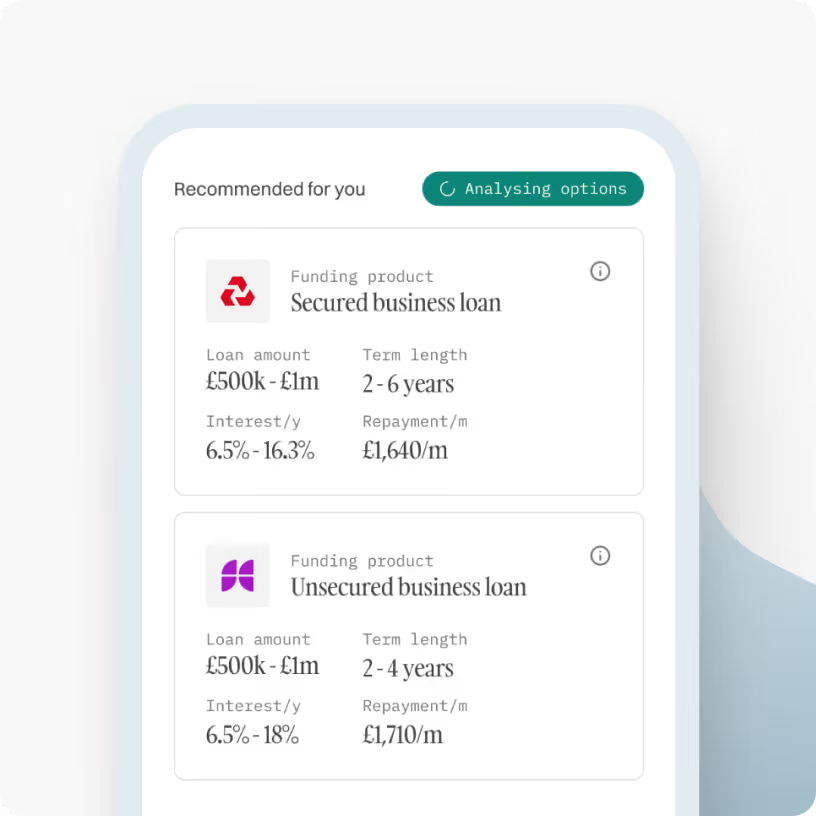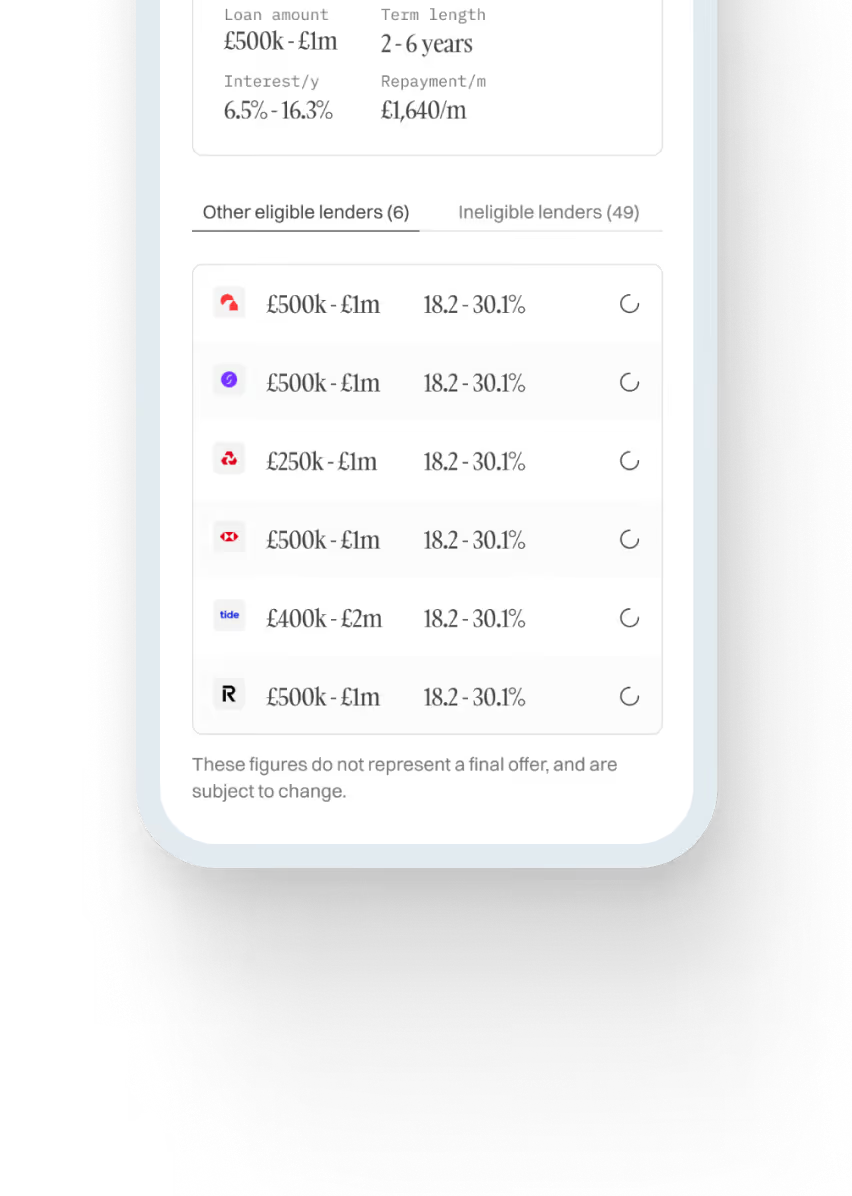




Apply For a Working Capital Loan To Help You Purchase Stock Cover Payroll Manage Fluctuations Pay Suppliers
Apply for a working capital loan today and get matched with a lender that can provide you with the financing you need to cover funding gaps.
- Apply in minutes
- Applying won’t affect your credit score
- Free, no obligation quote
From 8.9%
Interest rates per annum
£10,000 +
Monthly turnover
1 – 6 years
Loan term
£10k - £500k
Funding requirement
Our lending partners
About Working Capital Loans
Working capital refers to the money available to your business after you account for your incomings and outgoings.
It’s a measure of your liquidity, and can be calculated by subtracting your current liabilities (like rent, bills and supplier costs) from your current assets (like stock, cash, and unpaid invoices).
Healthy working capital is essential to maintaining your business’s day-to-day operations. If your working capital is low, a loan can help cover expenses like paying staff, buying stock, or covering running costs.
What is a working capital loan?
A working capital loan is a type of short-term finance designed to help a business cover its everyday operating costs.
Rather than being used for long-term investments or asset purchases, these loans are typically used to cover gaps in cash flow, especially during slower trading periods or when waiting on unpaid invoices.
Several types of working capital finance are available, and each option works slightly differently in terms of how funds are accessed and repaid, giving you flexibility depending on your business needs.
Key features
- Suitability: For UK businesses managing short‑term working capital gaps.
- Purpose: To cover seasonal fluctuations, stock purchases, payroll, moves or urgent repairs.
- Amount: Varies by product, with facilities available up to £3 million.
- Term: Typically short‑term, ranging from 1 month to 2 years, depending on the product.
- Security: Most options are unsecured, but asset finance typically uses the asset you purchase as collateral.
- Speed: Applications can be processed within 24 hours, with funds often available within 48 hours.
Here’s an overview of the different working capital finance options available:
- Short-term business loans: You receive a lump sum loan that is repaid in regular instalments over a set period, typically 1 to 24 months, but you can borrow for longer.
- Revolving credit facilities: Similar to an overdraft, these offer flexible access to funds up to a pre-agreed limit. You only pay interest on what you use, and you can withdraw it again once you’ve repaid the loan.
- Merchant cash advances: A cash advance repaid through a percentage of your card sales. Payments adjust with your revenue, making it a manageable option if you have fluctuating income.
- Invoice finance: You borrow against your unpaid invoices to unlock cash. This is useful if you offer trade credit and want to avoid long waits for payment.
The right option for your business will depend on how quickly you need the funds, how you plan to use them, and what kind of repayments your cash flow can support.
Covering short-term cash flow gaps
Cash flow gaps are common in small businesses, especially when customers pay late or your costs increase suddenly.
A working capital loan can help bridge the gap between money going out and money coming in, so you can keep your operations running without disruption.
Access to short-term funding means you don’t need to delay necessary payments or rely on personal savings during a quiet period.
Managing seasonal demand or slow periods
Many businesses face seasonal fluctuations in demand, particularly in industries like retail, tourism, and hospitality.
During slower trading periods, revenue might fall while outgoings like rent, wages, and supplier costs stay the same.
Working capital loans for small business owners can provide a financial cushion to help you get through quieter months and prepare for busy periods.
Paying for day-to-day costs
Everyday costs can add up quickly, and not all businesses have the cash available to cover them at short notice.
Access to working capital finance can help you meet your obligations if you need to restock popular products, make payroll, or cover your rent.
This type of short-term financing is beneficial if your business operates on tight margins or with long payment cycles, where delayed income can create pressure on your working capital.
Taking advantage of new opportunities
Opportunities often involve upfront costs, such as a new contract, a time-sensitive supplier deal, or a chance to boost marketing.
If the cash isn’t immediately available, a working capital loan can provide the funds you need to move forward without disrupting your day-to-day operations.
Working capital loans can be a useful way to manage cash flow, but like any type of finance, they come with trade-offs. Here are some advantages and potential drawbacks to consider before applying.
Pros of working capital loans
- Fast access: Many lenders offer same-day or next-day decisions, helping you get the funds you need quickly when cash flow is tight.
- Flexible use of funds: You can use the money for various business needs, from covering wages to buying stock or paying bills.
- Short-term commitment: Working capital loan terms are typically repaid over a period of several months, so you’re not tied into long-term repayments.
- Often unsecured: Many lenders don’t require collateral, making it easier for smaller businesses without major assets to qualify.
Cons of working capital loans
- Higher interest rates: Short-term business loans can come with higher rates than traditional finance, especially if unsecured.
- Additional fees: Arrangement fees, late payment penalties, and early repayment charges can increase the total cost.
- Short repayment windows: You’ll need to repay the loan quickly, which can add pressure to your monthly cash flow.
- Not suitable for long-term investment: Working capital finance is designed for short-term use and isn’t the right option for buying assets or funding growth.
Applying for a business loan can be quick and simple, especially when using an online lender like Aurora Capital:
- Complete an online application: You’ll just need to provide your business details, turnover, and how much you want to borrow
- Submit paperwork: This typically includes bank statements from the last 3–6 months and ID verification
- Receive a decision: Applications can be processed within 24 hours, with funds often available within 48 hours
- Access the funds: Once approved and you’ve signed the agreement, the loan can be sent to your business bank account
You can apply for a working capital business loan with Aurora Capital in minutes. You can receive a free, no-obligation quote, and applying won’t affect your credit score.
A working capital loan is a type of short-term finance designed to help a business cover its everyday operating costs.
Rather than being used for long-term investments or asset purchases, these loans are typically used to cover gaps in cash flow, especially during slower trading periods or when waiting on unpaid invoices.
Several types of working capital finance are available, and each option works slightly differently in terms of how funds are accessed and repaid, giving you flexibility depending on your business needs.
- Suitability: For UK businesses managing short‑term working capital gaps.
- Purpose: To cover seasonal fluctuations, stock purchases, payroll, moves or urgent repairs.
- Amount: Varies by product, with facilities available up to £3 million.
- Term: Typically short‑term, ranging from 1 month to 2 years, depending on the product.
- Security: Most options are unsecured, but asset finance typically uses the asset you purchase as collateral.
- Speed: Applications can be processed within 24 hours, with funds often available within 48 hours.
Here’s an overview of the different working capital finance options available:
- Short-term business loans: You receive a lump sum loan that is repaid in regular instalments over a set period, typically 1 to 24 months, but you can borrow for longer.
- Revolving credit facilities: Similar to an overdraft, these offer flexible access to funds up to a pre-agreed limit. You only pay interest on what you use, and you can withdraw it again once you’ve repaid the loan.
- Merchant cash advances: A cash advance repaid through a percentage of your card sales. Payments adjust with your revenue, making it a manageable option if you have fluctuating income.
- Invoice finance: You borrow against your unpaid invoices to unlock cash. This is useful if you offer trade credit and want to avoid long waits for payment.
The right option for your business will depend on how quickly you need the funds, how you plan to use them, and what kind of repayments your cash flow can support.
Covering short-term cash flow gaps
Cash flow gaps are common in small businesses, especially when customers pay late or your costs increase suddenly.
A working capital loan can help bridge the gap between money going out and money coming in, so you can keep your operations running without disruption.
Access to short-term funding means you don’t need to delay necessary payments or rely on personal savings during a quiet period.
Managing seasonal demand or slow periods
Many businesses face seasonal fluctuations in demand, particularly in industries like retail, tourism, and hospitality.
During slower trading periods, revenue might fall while outgoings like rent, wages, and supplier costs stay the same.
Working capital loans for small business owners can provide a financial cushion to help you get through quieter months and prepare for busy periods.
Paying for day-to-day costs
Everyday costs can add up quickly, and not all businesses have the cash available to cover them at short notice.
Access to working capital finance can help you meet your obligations if you need to restock popular products, make payroll, or cover your rent.
This type of short-term financing is beneficial if your business operates on tight margins or with long payment cycles, where delayed income can create pressure on your working capital.
Taking advantage of new opportunities
Opportunities often involve upfront costs, such as a new contract, a time-sensitive supplier deal, or a chance to boost marketing.
If the cash isn’t immediately available, a working capital loan can provide the funds you need to move forward without disrupting your day-to-day operations.
Working capital loans can be a useful way to manage cash flow, but like any type of finance, they come with trade-offs. Here are some advantages and potential drawbacks to consider before applying.
Pros of working capital loans
- Fast access: Many lenders offer same-day or next-day decisions, helping you get the funds you need quickly when cash flow is tight.
- Flexible use of funds: You can use the money for various business needs, from covering wages to buying stock or paying bills.
- Short-term commitment: Working capital loan terms are typically repaid over a period of several months, so you’re not tied into long-term repayments.
- Often unsecured: Many lenders don’t require collateral, making it easier for smaller businesses without major assets to qualify.
Cons of working capital loans
- Higher interest rates: Short-term business loans can come with higher rates than traditional finance, especially if unsecured.
- Additional fees: Arrangement fees, late payment penalties, and early repayment charges can increase the total cost.
- Short repayment windows: You’ll need to repay the loan quickly, which can add pressure to your monthly cash flow.
- Not suitable for long-term investment: Working capital finance is designed for short-term use and isn’t the right option for buying assets or funding growth.
Applying for a business loan can be quick and simple, especially when using an online lender like Aurora Capital:
- Complete an online application: You’ll just need to provide your business details, turnover, and how much you want to borrow
- Submit paperwork: This typically includes bank statements from the last 3–6 months and ID verification
- Receive a decision: Applications can be processed within 24 hours, with funds often available within 48 hours
- Access the funds: Once approved and you’ve signed the agreement, the loan can be sent to your business bank account
You can apply for a working capital business loan with Aurora Capital in minutes. You can receive a free, no-obligation quote, and applying won’t affect your credit score.
Get your free, no
obligation quote Today!
- Apply in minutes
- FREE, no obligation, personalised quote
- FCA regulated
How much do you want to borrow?
Securing business funding:
How it works
We understand that timing is key when you’re looking to find funding options for your business,so our process is as quick and as streamlined as possible.
1
Apply Online in minutes
We cater to any sized business, so to apply for business funding, we only need you to share basic information about your company. Your application will take a few minutes, and our experts are always happy to assist with any questions you have about specific loan types or alternative finance options.
2
Get Matched in hours
Our LendTech technology will compare our trusted panel of lenders and match you with your most suitable finance option. Each business funding option is different, and we’ll help to make sure you’re fully clued up on the terms and conditions as well as indicative repayment details.
3
Get Funded in days
One of our funding specialists will discuss the available options with you and guide you through the process from application to approval. Once approved, the funds can be deposited in a matter of hours.
Prefer to talk? Call us on 01371 870815
4.9/5 based on 100+ by happy customers
Navigate our range of business
funding options to find out more
We understand that timing is key when you’re looking to find funding options for your business, so our process is as quick and as streamlined as possible.
Apply for a recovery loan to help your business employ staff
A government backed loan to support businesses affected by the pandemic.
Looking to obtain an unsecured loan for your business?
Business loans up to £500k, without the need to secure on property or assets.
Apply for a secured business loan today and get matched with a lender…
Business loans up to £2M, secured against a UK property by way of 1st or 2nd charge.
It takes minutes to apply, there’s no effect on your credit score.
Acquire new or used equipment, machinery or vehicles and spread the repayments over 1-6 years.
Compare merchant cash advances to help your business purchase stock.
Borrow up to 2x your monthly card sales and repay through a small % of your future takings.
Compare revolving credit facilities to help your business grow.
A pre agreed credit facility, allowing you to dip in and out for future funding requirements.
Spread the payments of your PAYE, VAT or Corp Tax bills.
VAT/TAX loans up to £500k for PAYE payments, quarterly VAT payments or annual Corporation tax payments
Prefer to talk? Call us on 01371 870815
4.9/5 based on 100+ by happy customers
100+ Happy Customers & Counting
Working Capital Loans FAQs
A working capital loan is a type of business loan designed to cover short-term operating costs, like payroll, rent, or inventory.
It’s not designed for long-term investments or large asset purchases. Business loans can include a range of products with different terms, purposes, and repayment structures.
Yes, some lenders offer working capital loans to businesses with poor credit, but your options may be more limited.
You might face higher interest rates or be asked to provide a personal guarantee, which means you promise to repay the loan if your business can’t.
Improving your business’s cash flow and demonstrating strong trading performance can help increase your chances of approval.
These loans tend to be unsecured, but it is possible to use a secured loan to boost your working capital. Unsecured options don’t require collateral but may come with higher interest rates.
Secured loans typically offer lower interest rates but require you to back the loan with business assets. The right option depends on your circumstances and risk appetite.
Costs vary depending on the lender, loan size, and your business’s credit score. Interest rates can range from 7% to 30%, and you may also face arrangement fees or early repayment charges.
Always look at the total cost of borrowing, not just the rate, to compare your options properly.
You can often repay your loan early, but it depends on the lender. Some allow early repayment with no penalties, while others may charge a fee.
If you want the flexibility to pay your loan back before the end of the term, check your loan agreement before signing to ensure that early repayment will not increase your costs.